This article is sourced from the internet and is for research purposes only.
Lyophilized peptides, or freeze-dried peptides, are commonly used to preserve peptides in a stable, long-lasting form. However, the quality of these peptides — both before and after reconstitution — plays a critical role in their effectiveness and safety.
This article will guide you on what to look for in the lyophilized powder vials and reconstituted vials, provide tips on how to mitigate these risks.These visual indicators SHOULD NOT REPLACE https://www.lnpeptide.com/results/
What to Look for in Lyophilized Powder Vials
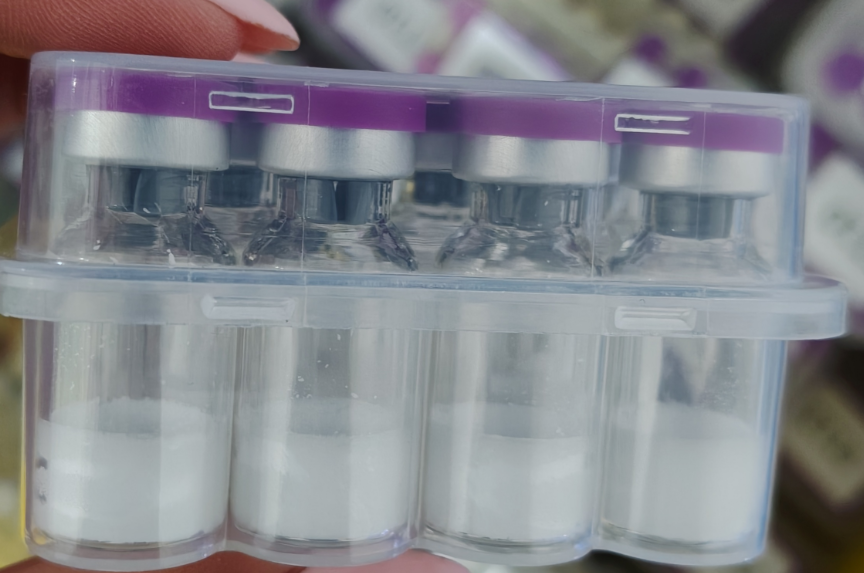
- Uniform Texture: The lyophilized cake should be uniform in texture and appearance, with no large crystallization or discoloration. A well-prepared lyophilized product will have a smooth, consistent white powdery texture. Broken pucks are not a concern as they can become broken apart during shipping and handling.
- Very Low Water Content: The texture should appear completely dry with no noticeable crystals. Lyophilized peptides should generally contain <3% water content (although this is not easily tested). While tirzepatide raw API should generally be <10% water content.
What to Look for in Reconstituted Vials
- Clear and Colorless Solution: After reconstitution, the solution should be clear and colorless, with no cloudiness or visible particles. This indicates that the peptide has dissolved properly and is free of contaminants.
- pH Level: The pH of the reconstituted peptide should fall within the specified range for the peptide, typically pH 6-9 for peptides like Tirzepatide and Retatrutide. Measure the pH to confirm it is within this range for comfortable injection and stable solution.
How to Mitigate Risks
- Inspect Vials Before Use: Inspect the lyophilized powder vial and reconstituted vial before using. If there are signs of gelling, cloudiness, or particulates, TOSS IT. Subcutaneous injections are actually very low risk for infection even if bacterial growth is present, but if you see cloudiness, it’s not worth injecting it. TOSS IT.
- Proper Storage: Typically, lyophilized peptides should be stored in a cold, dry place, away from direct sunlight, and should be reconstituted only shortly before use to prevent degradation. Freezing kits of lyophilized peptides at -80*c to -20*c (-112*f to -4*f) helps to lengthen their lifespan for long-term storage.
- Test Your Product: The only way to be sure your peptide product is the actual peptide with reasonable purity and at the expected potency (mass fill) is to third-party test your peptide.
发表回复